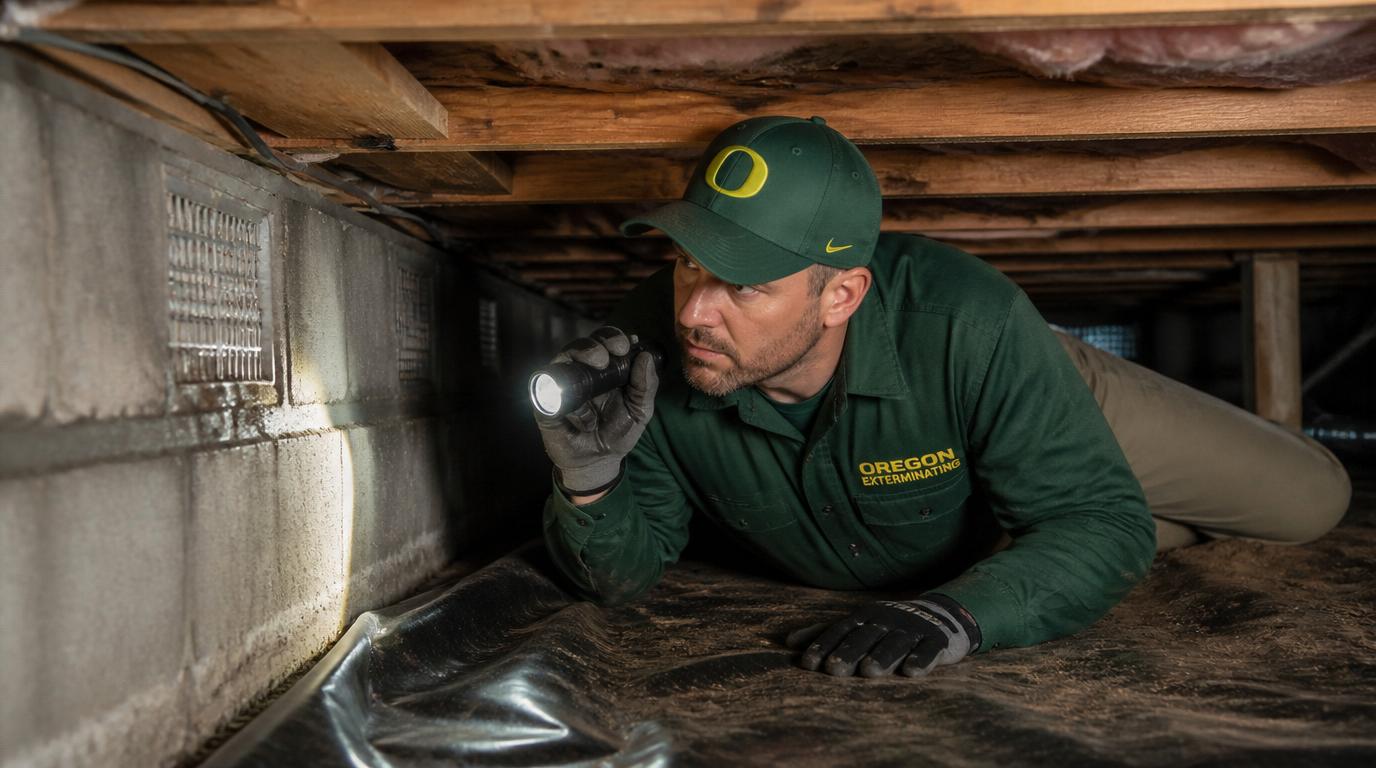
Crawl space & attic restoration — back to clean, back to breathable.
Rodents don't just move out; they leave contamination behind. Soiled insulation off-gasses ammonia into the rooms you live in and stops insulating the moment it is wet. We strip it out, sanitize the cavity, and roll in fresh high-density insulation built for the wet Willamette winter.
Free assessment · HEPA containment · Insulation rolled to code R-value
The rodents leave. The biohazard stays.
By the time an infestation is trapped out, a Eugene attic or crawl space can hold years of accumulated droppings, urine-saturated insulation, and nesting debris. This is not a cosmetic problem. Rodent waste off-gasses ammonia that drifts down into your living space through every ceiling penetration, and dried droppings can carry hantavirus and other pathogens that become airborne the moment the material is disturbed.
Soiled insulation also stops doing its only job. Once it is matted, wet, and compressed by traffic, its R-value collapses — so you are heating the outdoors while breathing the contamination. Restoration fixes both at once.
- Full HEPA-filtered containment before anything is disturbed
- Soiled insulation bagged and removed, not just covered over
- Droppings and nesting debris HEPA-vacuumed from the cavity
- Hospital-grade antimicrobial fog on every surface
- Fresh high-density insulation rolled or blown to current code
That smell in the back bedroom isn't going to clear on its own.
Contaminated insulation only gets worse — wetter, heavier, and more pungent — the longer it sits above your ceiling. One call gets a crawl space and attic assessment scheduled this week.
Need help now? Call(541) 422-4462How a contaminated cavity becomes clean again.
Restoration is sequenced like remediation work, because that is what it is. Skipping the containment or the sanitizing step just spreads the contamination into your living space.
Containment & PPE
Crews suit up in respirators and Tyvek, seal the work zone, and run HEPA negative-air so airborne particulate never reaches the rooms below.
Removal
Every contaminated batt, blown clump, and nesting pile is bagged at the source and carried out — never compacted or left in place under fresh material.
HEPA vacuum & scrape
Droppings, urine pillars, and debris are vacuumed from joists, ducts, and decking until the cavity is physically clean, not just emptied.
Antimicrobial sanitizing
The entire space is fogged with a hospital-grade botanical antimicrobial that neutralizes pathogens and the pheromone trails that draw the next rodent back.
Re-insulate to code
Fresh high-density insulation is rolled or blown to current Oregon R-values — typically R-38 in the attic and R-19 to R-30 under the floor — so the cavity performs better than it did new.
Why Eugene crawl spaces need more than a sweep-out.
Lane County's damp, mild climate is hard on under-floor insulation even without rodents. Add a season of nesting and the material holds moisture like a sponge, which invites mold and wood rot on top of the contamination. A proper restoration pairs the cleanup with a moisture strategy — the right vapor barrier and ventilation — so the fresh insulation you just paid for does not slowly fail the same way.
That is why we treat restoration and moisture control as two halves of one job. Clean the cavity, then keep it dry, and it stays restored for the long run.
What Eugene homeowners ask about restoration.
Is rodent contamination actually dangerous, or just gross?
Both. Dried droppings and urine can carry hantavirus, salmonella, and other pathogens that become airborne when the material is disturbed — which is exactly why we contain the space and run HEPA filtration before touching anything. The ammonia off-gassing is also a genuine indoor-air-quality problem, not just an odor.
Can't I just lay new insulation over the old?
No. Covering contaminated insulation traps the pathogens and ammonia underneath and compresses the new material, so you lose both the sanitation and the R-value. The soiled material has to come out first. Anyone offering to simply 'top it off' is cutting the corner that matters most.
How long does a crawl space or attic restoration take?
Most Eugene jobs run one to three days depending on square footage, contamination level, and access. Tight hillside crawl spaces in South Eugene take longer than a walk-in attic. You get a firm timeline at the free assessment.
Will insurance cover any of this?
Sometimes — it depends on your policy and the cause of loss. We document everything with photos so you have what you need to file. Either way, the assessment and the honest scope are free, and there is no form to fill out: just call.
Get your air back.
Restoration is what turns 'we got rid of the rats' into a house that smells and breathes like new again. Call to get your crawl space and attic assessed.